
Should You Repair Your System, or Replace It?
The honest framework, from the licensed technician who would be doing either job.
Repair or replace
Repair your system when the failure is a part and the rest of the unit is sound, and replace it when the failure is the unit itself. That is the whole decision, and it turns on three questions you can answer in one visit: what actually failed, what that repair costs against the price of a new system, and what condition everything else is in.
Age is the reason most people are told to replace, and age on its own decides almost nothing. A well maintained cast iron boiler frequently runs 25 to 30 years and some run longer. Warm air furnaces tend to land between 15 and 20 years. Wall hung condensing units usually come in shorter than cast iron because they run harder and carry more electronics. A twenty year old boiler in good condition and a twelve year old boiler with a cracked section are not the same conversation, and only one of them ends in a new system.
Homeowners around here compare three and four quotes and pick the one that felt honest rather than the one that came in cheapest. There is a reason for that. The stories that circulate in southern New Hampshire are about five figure replacement quotes written against systems with years of life left in them, and a great many of those quotes are answered by a circulator, an aquastat, an ignition module or a good cleaning.
The framework
Three questions decide it
- 01
What actually failed?
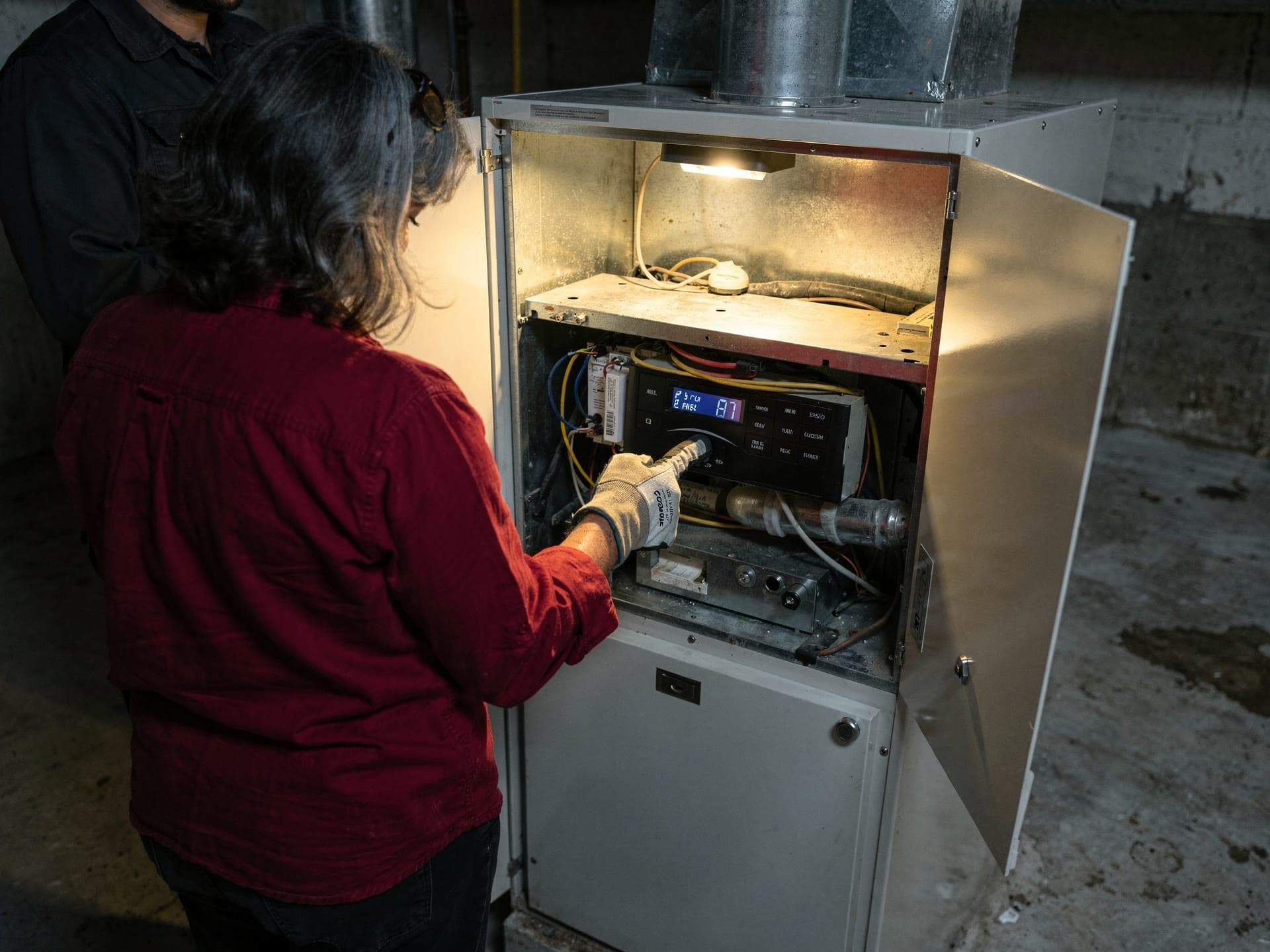
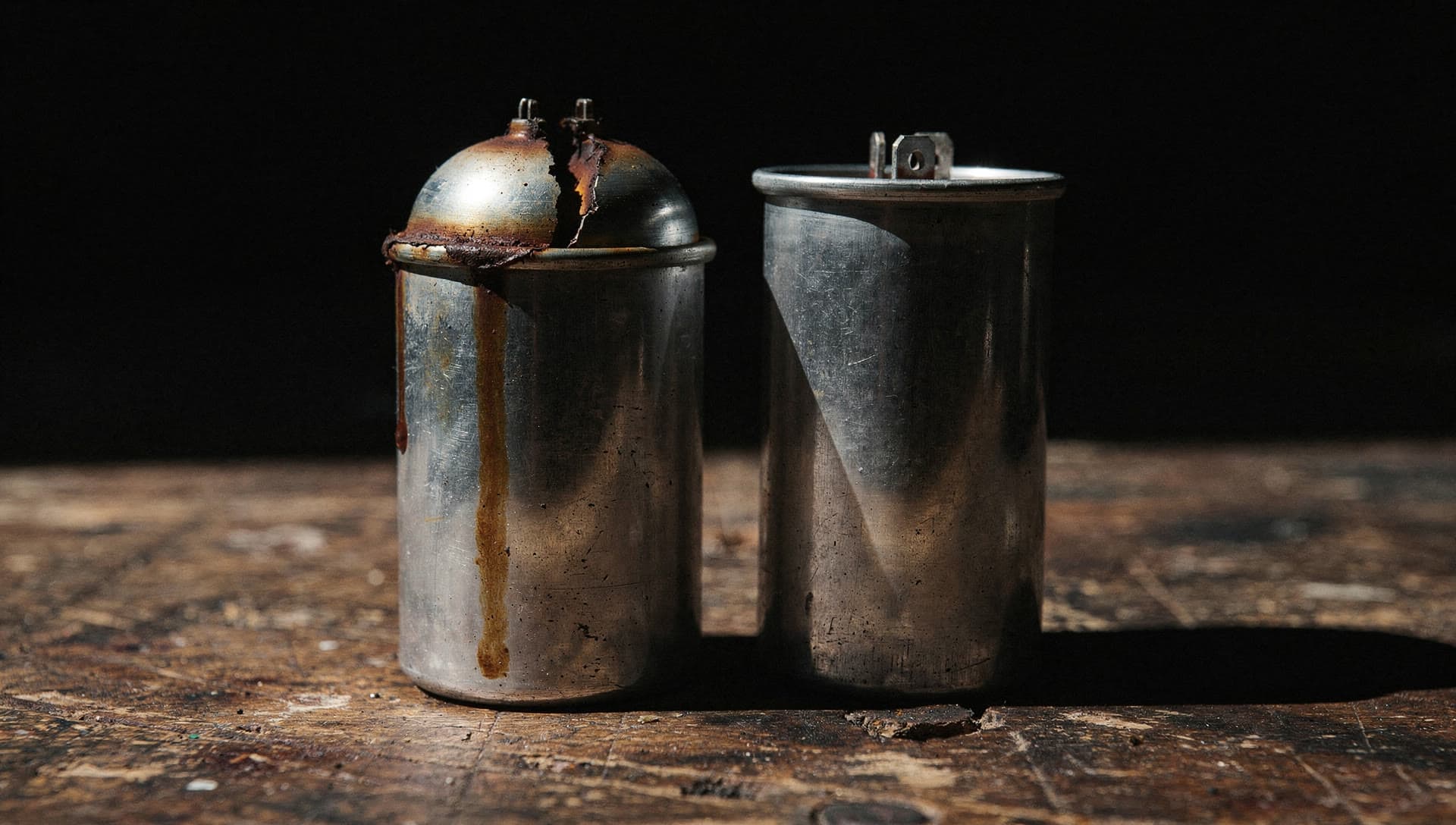
A control board, a circulator, an aquastat, an ignition module, a nozzle or a fouled burner is a part. A cracked heat exchanger, a leaking section or a failed compressor is the unit. Naming the specific failure is the first thing that happens, and you get shown it with the panel open.
- 02
What does the repair cost against a new system?
A repair at a fraction of a replacement on a sound system is an easy call. A repair that costs most of what a new system costs is the point where the arithmetic flips, and you hear that arithmetic out loud rather than a conclusion.
- 03
What condition is the rest of it in?
One failed part on an otherwise healthy unit is a repair. The same part on a system with rust, scale, a history of failures or parts that have to be hunted down is a different answer, because the next call is already on its way.
Side by side
When each answer is the right one
Nothing on this list is a rule of thumb about age. Every line is about condition, which is the only thing that actually decides it.
| Repair usually wins when | Replacement is the honest answer when |
|---|---|
| A control board, circulator, aquastat or ignition module failed on a boiler that is otherwise sound. | The heat exchanger is cracked, or a cast iron section is leaking. |
| The system is dirty rather than dying, and a proper cleaning with a combustion test brings it back. | The repair costs most of what a whole new system costs. |
| The repair is a fraction of a replacement and the rest of the unit is in good shape. | Parts have to be hunted down because the equipment is long out of production. |
| A cast iron boiler is old on paper and sound in the metal. Well maintained cast iron frequently runs 25 to 30 years. | A warm air furnace is at the far end of the 15 to 20 year range and failing repeatedly. |
| The house is comfortable, the fuel bill is normal, and age is the only complaint. | The unit is unsafe to run, which is a call you hear immediately rather than afterwards. |
Equipment service lives are typical figures for this climate, not guarantees. Condition is what drives the recommendation on your house.
The policy
This has been the rule since the day the business opened
If a unit is able to be repaired and if doing so is cost effective for the customer, then a repair will be our first recommendation.
That sentence is on this business because it is how the work runs, and it cuts both ways. When a system genuinely is finished you hear that too, with the reason and with the panel open so you can see the same thing. Estimates on installations and replacements are free, and on a repair you hear the price before the work begins.
Already holding a quote?
Bring it. A second opinion on somebody else's number is a normal thing to ask for and it is a normal thing to give. Say what the quote was for when you get in touch, and bring the paperwork to the visit.
Questions homeowners ask before they decide
- Should I repair or replace my boiler in New Hampshire?
- Repair it when a part failed and the rest of the boiler is sound, and replace it when the boiler itself is the failure. A control board, circulator, aquastat or ignition module on an otherwise healthy unit is almost always worth repairing. A cracked section, a leaking heat exchanger, or a repair that costs most of a replacement is where the answer flips. Age by itself decides very little in this climate, because a well maintained cast iron boiler frequently runs 25 to 30 years.
- How do I know if a replacement quote is fair?
- Ask what specifically failed, ask what a repair of that failure would cost, and ask what condition the rest of the system is in. A quote that answers all three in plain language is a quote you can trust. A quote that leads with the age of the unit and never names the failure is worth a second opinion, and getting one is a normal thing to do.
- How long should a boiler or furnace last?
- A well maintained cast iron boiler frequently runs 25 to 30 years and some run longer. Warm air furnaces tend to land in the 15 to 20 year range. Wall hung condensing units usually land shorter than cast iron because they run harder and carry more electronics. Those are typical service lives in this climate rather than expiry dates, and condition is what decides the recommendation.
- Is it worth repairing an old oil boiler, or should I convert to a heat pump?
- It depends on three things. How old and how efficient the current system is, how well the house holds heat, and what your electric and fuel costs look like. A boiler with years of life left in a tight house is usually worth keeping and pairing with ductless for cooling and the shoulder seasons. A tired oil furnace in a leaky house is a strong conversion candidate. Six years co-owning an oil company sits behind that conversation, so you get the arithmetic both ways, including when the answer is to keep what you own.
- Do you charge for a second opinion?
- Estimates on installations and replacements are free. On a repair call the visit starts with finding out what is actually wrong, and you hear the price before any work begins. Bring the quote you already have and say what it was for when you get in touch.
- What happens if the honest answer is that I need a new system?
- You hear it, with the reason, and with the panel open so you can see what led to it. On a replacement the near boiler piping is where quality shows and where corners usually get cut, so the estimate covers proper primary secondary piping, correct circulator placement, real air and dirt separation, clean venting, and a system that gets purged and balanced before anyone leaves.
Last updated 2026-07-30
Send the quote and the symptom. You get a straight answer.
Describe what the system is doing and what you were told, and Brian reads it himself. Free estimates on installations and replacements, straight answers on repairs, and the same person on the phone as in your basement.
- 24
- Years in the trades
- 8
- Years in HVAC
- 6
- Years co-owning an oil company
- 3
- Licenses and certifications