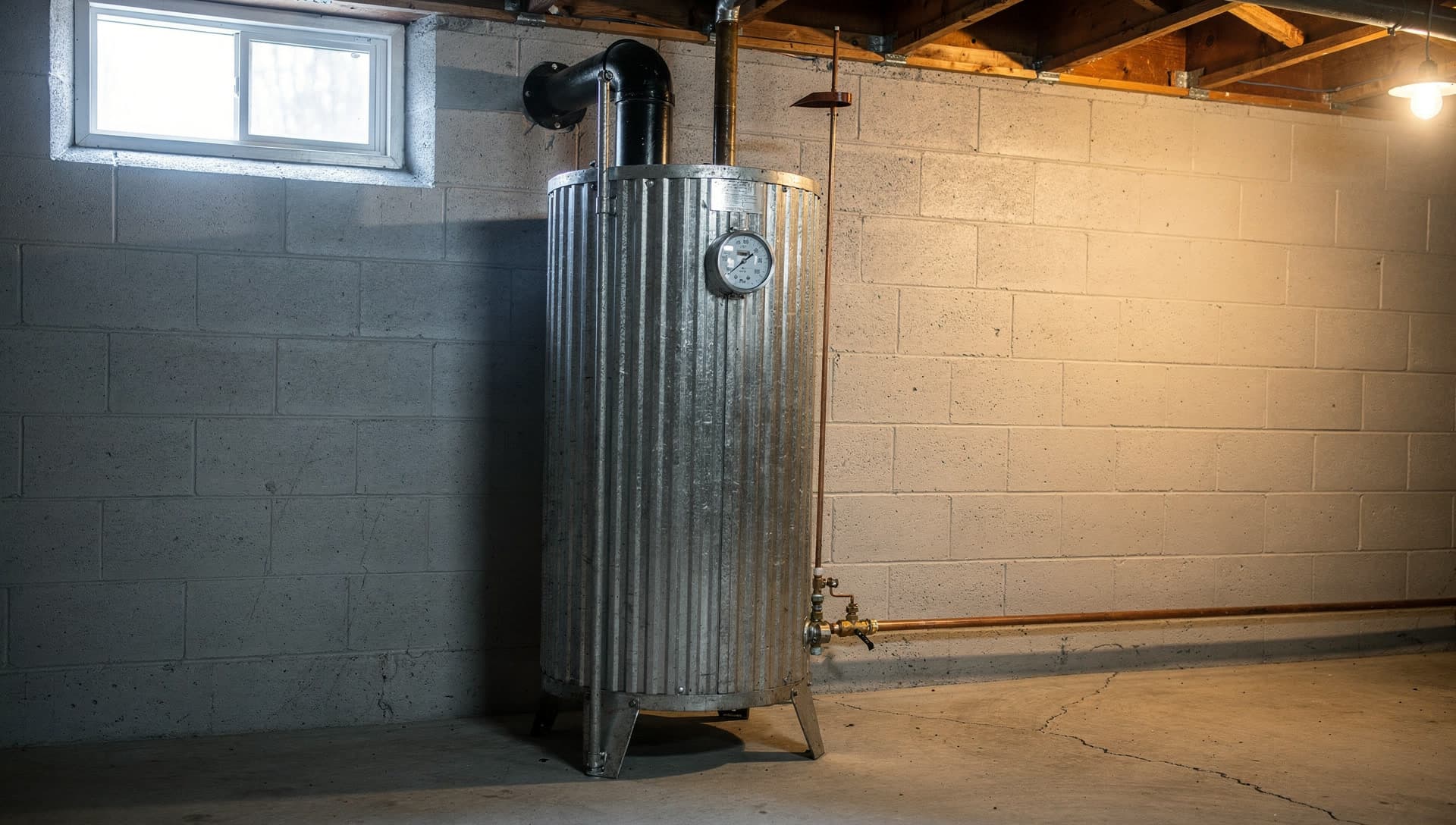
Oil Tank Replacement and Installation in Windham, NH
Replaced properly, by someone who ran the oil side
What this work is
Oil tank installation and replacement, including pulling the old tank out and disposing of it, done by someone who spent six years co-owning an oil company before holding an HVAC license.
A failing oil tank is one of the few things in a basement that can turn into a five figure problem overnight. A seam that weeps onto a concrete floor is a cleanup. A tank that lets go is a remediation, and homeowner policies are rarely as generous about it as people assume. Tanks are also the item most likely to stop a house sale at inspection.
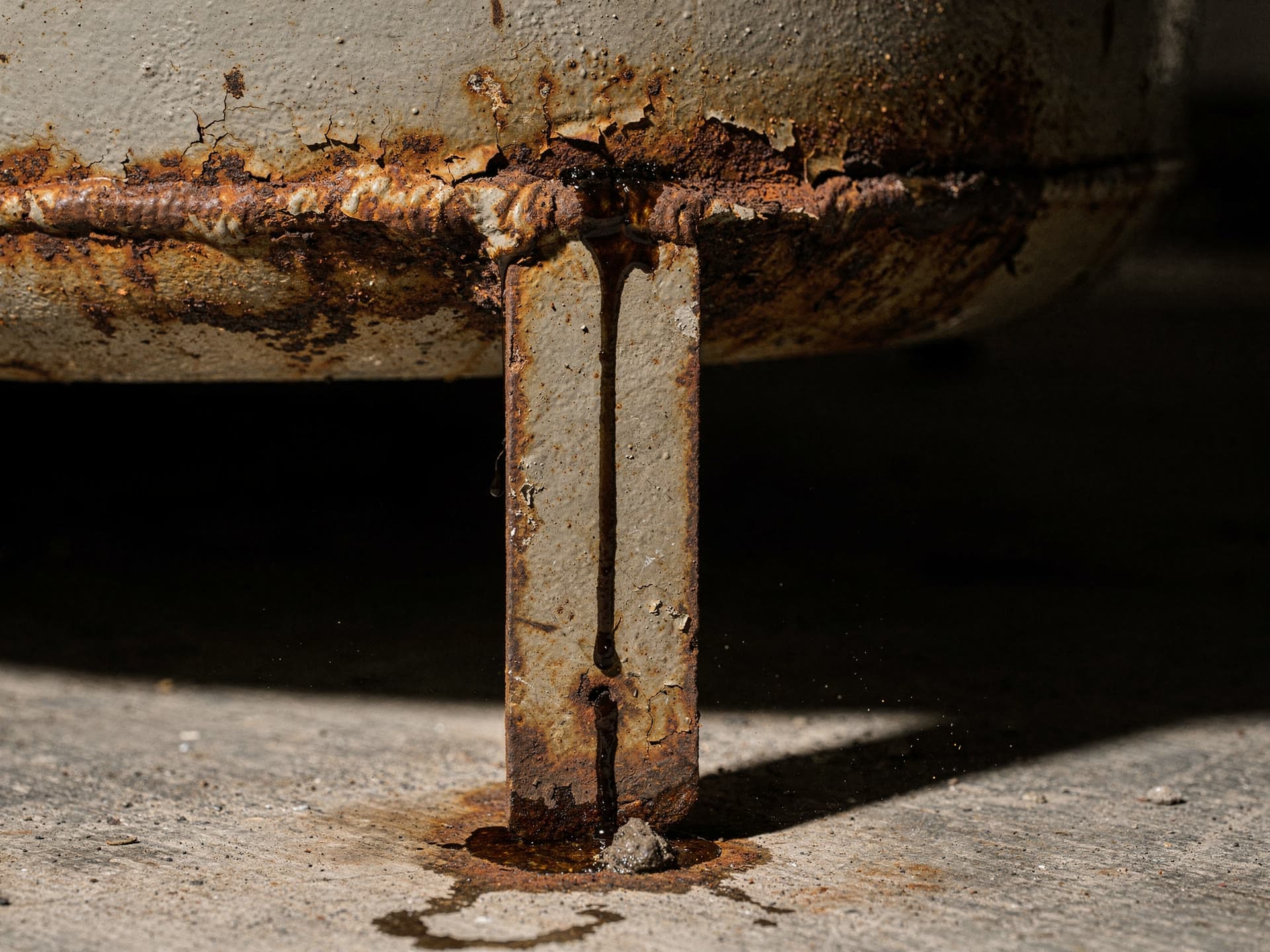
Tanks do not fail from the outside in. They fail from the inside out, because water condenses in the airspace above the oil, settles under the fuel, and corrodes the bottom of the tank where nobody can see it. That is why a tank can look acceptable and still be near the end, and why the tell tale signs are wet spots underneath, rust blooming at the seams and the legs, and age.
Six years co-owning an oil company means this work is familiar territory rather than an occasional job. Sizing and siting the new tank, deciding between a standard steel tank and a double wall or Roth style tank, setting it properly, running new fill and vent piping to the exterior, replacing the oil line and sleeving it under concrete, and making sure the whole install meets code and satisfies both the fuel dealer and the insurance company.
The old tank leaves. It gets drained, cut down where it has to be to get out of the basement, removed and disposed of correctly, and the remaining oil is handled rather than left as your problem. That should be standard and it is worth confirming with anyone you hire.
What it costs
What this costs in southern New Hampshire
Nobody in this county publishes a number, which is exactly why these are here. The figures below are what the market charges, gathered from published cost data rather than from a quote sheet. Your house sets the final number, and you hear it before anything starts.
| Typical job | Published market range |
|---|---|
| Basement tank replacementThe common case in southern New Hampshire. No pad to pour, no digging. | $1,200 to $3,300 |
| Outdoor above ground tankAdds a concrete pad, which most codes require. | $1,200 to $3,200 |
| Underground tank replacement | $1,600 to $4,600 |
| The tank itself, 275 gallonRoughly $800 to $1,900 single wall, $1,200 to $4,600 double wall or Roth style. | $800 to $4,600 |
| Pulling and disposing of the old tankPlus $50 to $150 to pump out and dispose of the oil still in it. | $250 to $600 |
| Cleaning up after a tank that let goThis is the number the whole job exists to avoid, and homeowner policies are rarely as generous about it as people assume. | $2,500 to $17,000 |
Market data read directly from HomeGuide's 2026 oil tank replacement cost guide on July 31, 2026, where the national average is listed at $2,400 and the average range at $1,200 to $4,600. Northeast work runs roughly 15 percent above the national figure. These are market ranges, not our rates.
What moves the number on your house
- Tank type and size
- A standard 275 gallon steel tank, a double wall tank and a Roth style tank are different products with different installations, and the right one depends on the location.
- Indoor or outdoor
- Basement tanks and outdoor tanks have different requirements for the pad, the piping, the protection and the code inspection.
- Getting it in and out
- A bulkhead is straightforward. A narrow stairwell and a tight turn at the bottom means the old tank gets cut down in place and the new one gets carried in a harder way.
- The oil that is still in it
- Whatever is left has to be pumped out and handled properly. How much is in there when the work starts changes the labour.
- Fill and vent piping
- Reusing the existing exterior fill and vent is sometimes possible. New piping through the foundation is a bigger part of the job.
- Oil line and code work
- A new sleeved oil line, a fire valve, a filter and a permit are normal parts of doing it right rather than optional add ons.
If a home inspection flagged your tank and there is a closing date attached, say so when you call. That changes how the job gets scheduled.
Repair or Replace? Read This First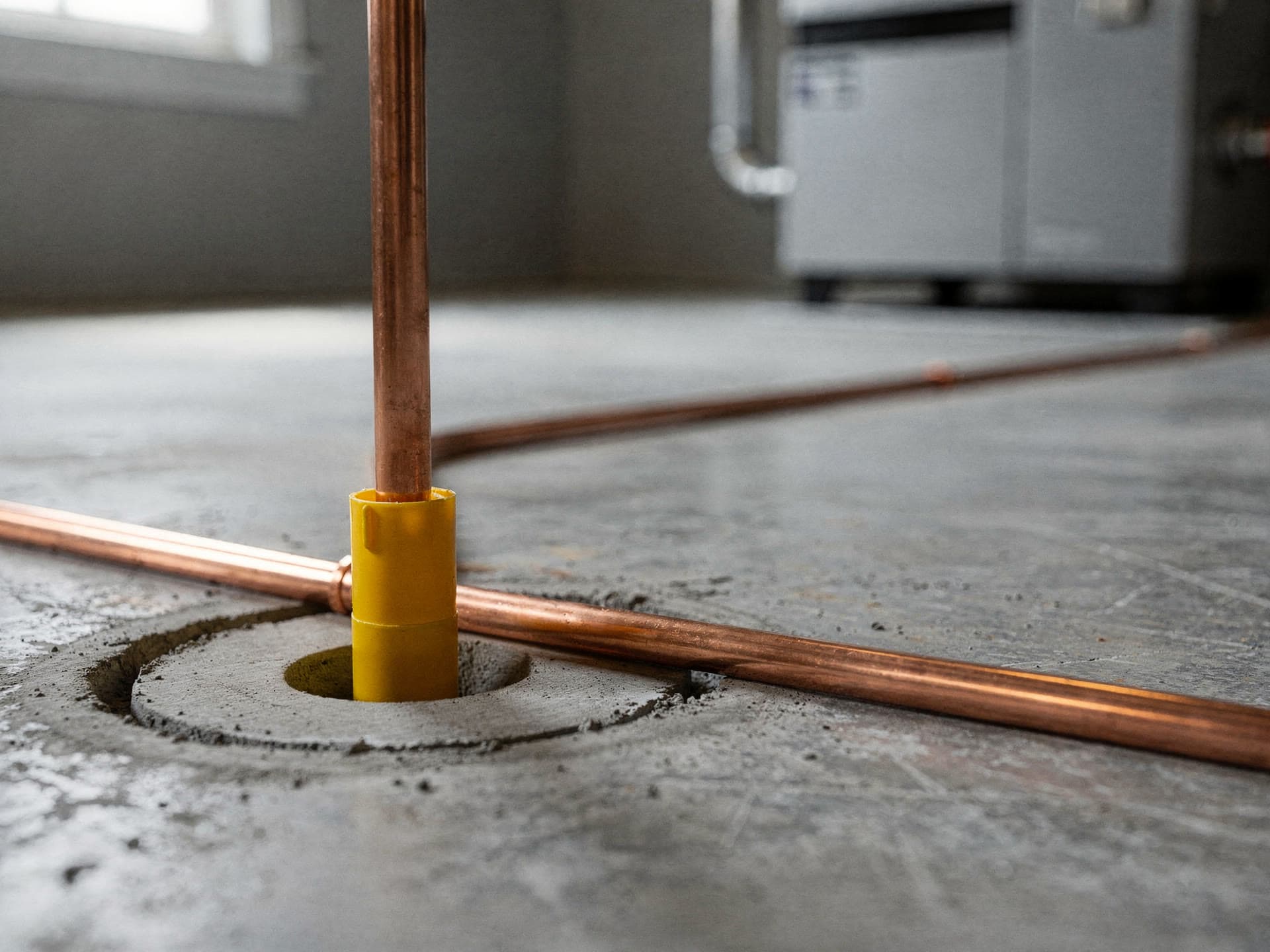
What you get out of it
Oil tank installation and replacement for southern New Hampshire homes, including removal and disposal of the old tank, new fill and vent piping, and protected oil lines.
- Old tank drained, removed and disposed of as part of the job
- Double wall and Roth style tanks available where the site calls for it
- New fill and vent piping run correctly to the exterior
- Oil line replaced and sleeved, which is what code and insurers look for
- Six years of oil company ownership behind the recommendation
- Coordination with your fuel dealer so the delivery schedule keeps working
Check it yourself
Five things to look at before you call anybody
Tanks corrode from the inside out, because water condenses above the oil and settles underneath it, so the damage happens where nobody looks. That is why a tank can look acceptable and still be near the end. Take a light down there and check these five.
- 01
The floor underneath
Wet or oily patches, or a stain that has been there long enough to darken the concrete. This is the one that matters most, because it means the tank is already weeping.
- 02
The seams and the legs
Rust blooming along the welded seam or at the base of the legs. Surface rust is common. Flaking rust that leaves a pile underneath is not.
- 03
The underside of the tank
Pitting, or bubbling paint on the bottom third. Run a hand along it if you can reach. Corrosion works upward from the lowest point, because that is where the water sits.
- 04
The oil line
Bare copper running across a concrete floor. Unsleeved line under concrete is what insurers and inspectors flag first, and it is a cheap thing to put right.
- 05
The age, if anyone knows it
Nobody knowing is itself an answer. A tank whose age is unknown gets judged on condition, and condition is what the four checks above tell you.
Find any of the first three and it is worth having looked at before the heating season, rather than after. If a home inspection already flagged your tank and there is a closing date on it, say so when you call, because that changes how the job gets scheduled.
Oil Tanks, answered
- How do I know if my oil tank needs replacing?
- Look underneath and at the seams. Wet or oily spots on the floor beneath the tank, rust blooming at the seams or at the base of the legs, pitting on the bottom, or a tank whose age nobody knows are all reasons to have it looked at. Tanks corrode from the inside because water settles under the oil, so a tank that looks passable on the outside can still be close to failing.
- How long does an oil tank last?
- It varies more than people expect, driven mostly by how much moisture has been sitting in it. Many indoor steel tanks give twenty to thirty years, and some go well past that, while a tank in a damp basement can be finished considerably sooner. Age is a reason to inspect, and condition is what decides it.
- Do you take the old tank away?
- Yes. Draining it, removing it from the basement, and disposing of it correctly, along with the remaining oil, is part of the job rather than something left behind for you to arrange.
- What is a double wall tank and do I need one?
- A double wall or Roth style tank is a tank inside a tank, so a leak in the inner shell is contained by the outer one. It costs more than a standard steel tank and it is the right choice in a finished basement, over a floor drain, or anywhere a spill would be expensive. Insurers and buyers both look on them favourably.
- My home inspection flagged the tank before closing. Can that be handled quickly?
- That situation comes up regularly and it is understood. Call, describe what the inspector wrote, and tell me the closing date. The scheduling conversation is honest, so you will know where you stand rather than being told what you want to hear.
Last updated 2026-07-30
Tell me what your system is doing.
Send the details and Brian reads them himself. Free estimates on installations and replacements, straight answers on repairs, and the same person on the phone as in your basement.
- 24
- Years in the trades
- 8
- Years in HVAC
- 6
- Years co-owning an oil company
- 3
- Licenses and certifications